
The Line | AWE 2026
"The one where we explore it all," is how Benjamin Baker describes The Line, a programme that brings together the human, the lines of time, and the uselessness of pigeonholes, hopefully with a good measure of joy and unity along the way!
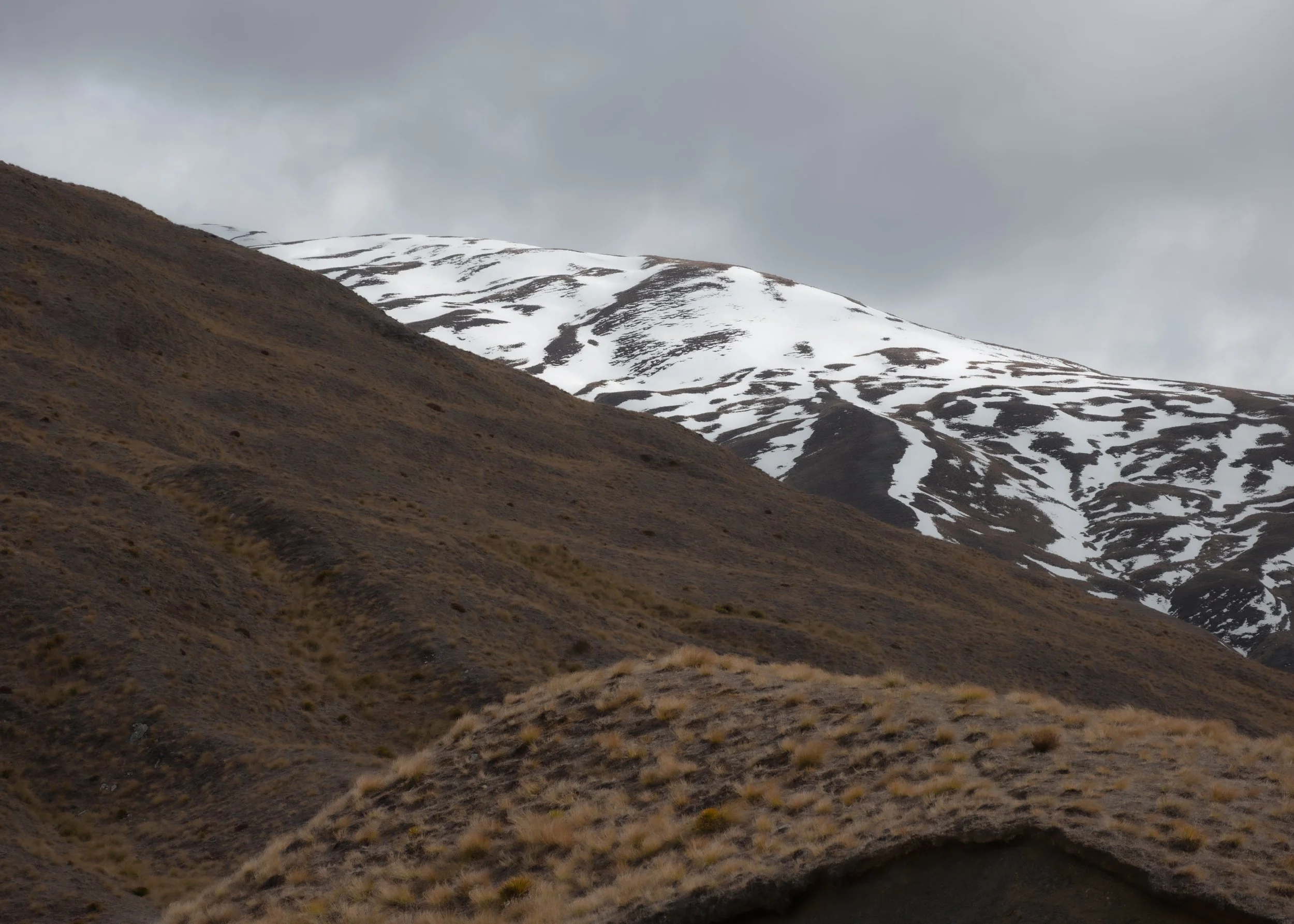
We begin the final programme of AWE 2026 with Claude Debussy's Des pas sur la neige, for solo piano, a literal exploration of footprints through snow. A solitary footstep, and then another, and suddenly you have a journey: a line traced through stillness. Debussy left an instruction at the top of the score that the piece's dragging, insistent rhythm should carry the sonic value of a sad and frozen landscape. It is one of his bleakest, most beautiful preludes with thirty-six bars of near-silence, a single figure walking alone through an empty world, each footprint a point on a line that leads nowhere in particular except onward.
From solitude to relationship: Luciano Berio's Violin Duos. Berio came from a family of musicians stretching back generations, his grandfather Adolfo (whose work we hear in Strung) and his father Ernesto were both organists and composers before him, a musical line of ancestry running straight down to Luciano. Each of the Duos was written for a specific pair of performers and shaped by their particular personalities. These aren’t hierarchical pieces, one voice leading and the other following, rather studies in convergence and divergence, where the identity and character of each duo only fully emerges through the relationship between the two players performing it.
Our next work is the last piece by this year’s Composer in Residence, Michael Norris. The Spaces in Between, for piano trio, asks us to look at what we usually overlook. Lines give us points of focus, but there is always space in between, wherever we choose to look for it and nothing is ever quite as solid or continuous as it seems. In music, we rarely think about the silence around the notes, yet that is exactly the fragile territory this piece inhabits, the place where sound and silence intersect. The music, in a real sense, hasn't stopped in the silence. Norris has spoken of the piece in terms of shifting relationships across time, and part of its inspiration comes from geology and the fault lines and folded rock strata around Kaikōura, seabeds bent slowly and violently out of shape. We tend to think of rock as the most solid thing there is, and yet under enough pressure, even rock bends. We’ll hear from Michael one final time during our last AWE+ Free Artist Talk.
From the fault lines of Aotearoa we travel on to the mountainscapes ofEurope with Anton Webern's Langsamer Satz for string quartet, written in 1905 after a hiking holiday with his cousin Wilhelmine, whom he would later marry. It is, in essence, a declaration of love, composed years before Webern became known as one of the architects of twelve-tone music. Here he combines Bach-like counterpoint with a full Romantic, late-Brahmsian language, unfolding as one continuous line passed between the four instruments, each one picking it up and carrying it forward without a break.
We close this year’s Festival with Erich Wolfgang Korngold's Piano Quintet, Op. 15 from a composer who spent much of his career fighting to escape a pigeonhole he never asked to be put in. Korngold emigrated to the United States ahead of the Second World War and, in Hollywood, became one of the founding figures of the film score as we know it. That achievement came to overshadow everything else: for decades afterwards, he was filed away as a "film composer," a label that overshadowed the fact that he had also been one of the most talked-about compositional talents of early twentieth-century Europe. The Piano Quintet was written in 1920–21, over a decade before he ever set foot in Los Angeles and serves as a snapshot of his brilliance as a 24-year-old, still years away from the categorisation that would come to define, and confine, his reputation. It is a joyous, big-hearted piece, and hearing it now is a chance to meet Korngold on the line he wanted to draw for himself, before anyone else tried to sketch it differently.