
Radiance | AWE 2026
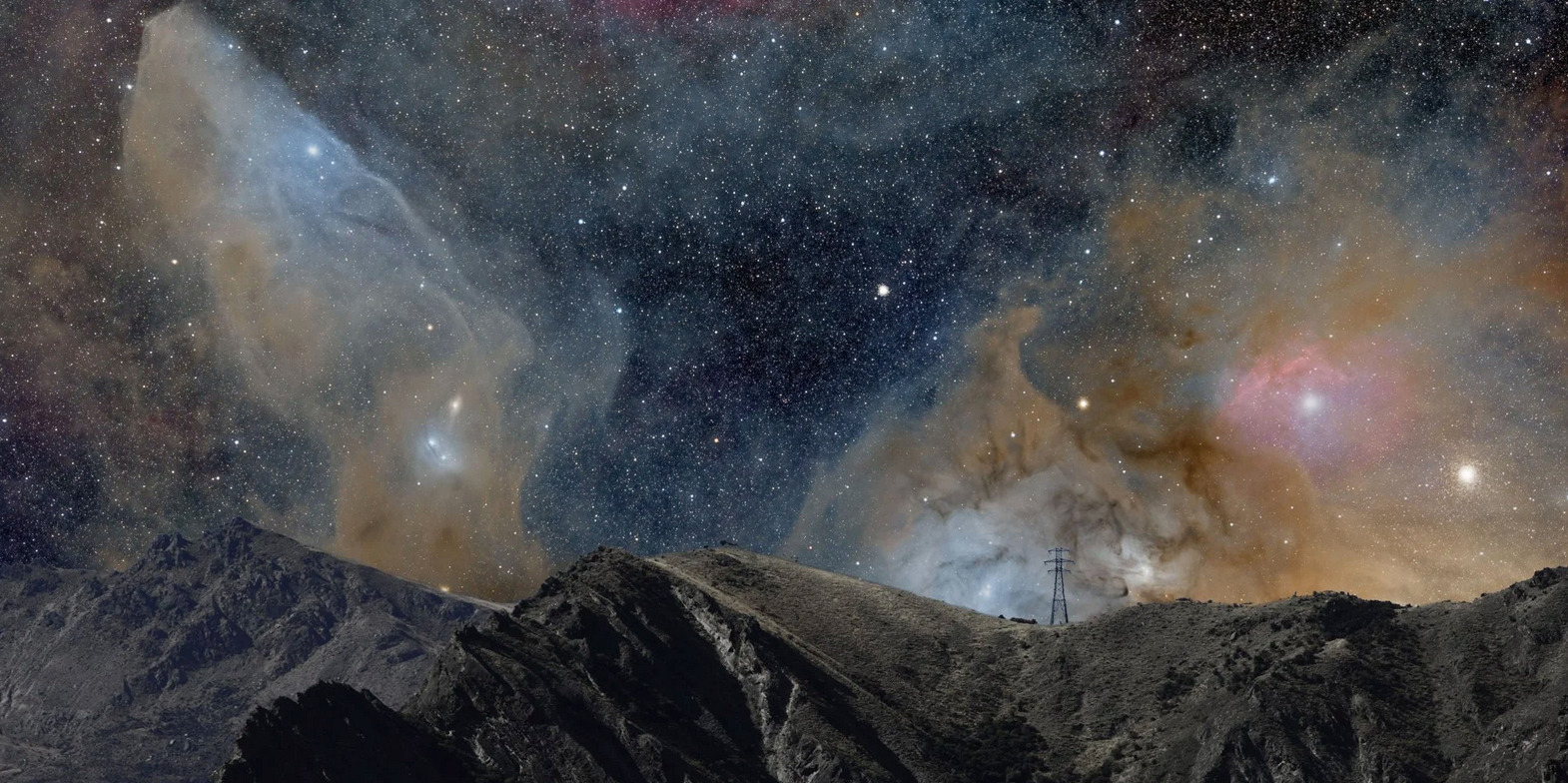
Radiance began, as so many of our programmes do, with a conversation. This one started with Winterstellar Charitable Trust, a charity working to protect Central Otago’s night skies, and with Brian Boyle, the renowned astronomer behind Nobel prize–winning research, who has spent years working alongside them. Their efforts recently secured Dark Sky status for the Kawarau Gibbston International Night Sky Park. This is the highest rating a night sky can hold, where a stretch of sky is protected simply for what it is and for what it lets us see. That conversation is where Radiance was born, a programme about cosmic lines and about what looking up at them stirs in us.
As Ben puts it, this is our nod to infinity and beyond (thank you, Toy Story).
We open with Michael Norris's Deep Field II, for violin and live electronics. Norris takes his inspiration from Hubble, and specifically from the Deep Field images: photographs of a patch of sky once thought empty, revealed instead to be filled with thousands of galaxies we never knew existed. A telescope, like this piece, can show us what could not otherwise be seen. Electronics stretch the violin's voice outward, toward something vast and previously invisible.
Schubert's Notturno for violin, cello and piano turns our attention from cosmic distance to something closer and quieter: a nocturnal meditation, unhurried and suspended, where time seems to hang rather than pass.
From there we move to Penderecki's String Quartet No. 3, "Leaves from an Unwritten Diary." This is a very private late work, one that looks back across a life in glimpses and fragments of memory, tracing a line between past and present at a moment when Penderecki's own future was visibly shortening. It sits somewhere between memoir and meditation, uncertain of what may or may not come next, and holds our fleeting mortality up against the infinite beyond.
At this point, the programme turns inward, pausing the journey into the unknown with a meditation on everything that has come before. This pause is accompanied by another instrumental transcription of a Bach chorale and four equal voices on a journey together, moving with quiet independence while finding meaning in one another.
Arvo Pärt's Summa for string quartet follows, his setting of the Latin Credo rendered through the minimalist tintinnabuli style that he made his own. His is a music built for spiritual focus and for a resonance that lingers in the air after the sound has stopped.
Radiance closes with Caroline Shaw's Entr'acte for string quartet, a piece whose very title means "between two acts." It is, by definition, an interlude and that is exactly why we end here. What comes next? We don't know. In the end, we are all we have. That is all any of us really know. And perhaps the more we gaze upon what lies beyond, the more it simply reflects back upon ourselves.
Our first AWE+ event of the evening looks at rising stars rather than celestial ones. An AWE+ Free Performance from 4:45-5:30pm showcases our 2026 Emerging Artists and Composer with a programme that traces lines of friendship, place and musical inheritance.
Our second AWE+ event of the day features a special element of this year’s programme. Arrowtown artist and designer Ed Cruikshank has created Orbital, a sculptural installation woven into Michael Norris's new commission for our Between programme — brass reshaped and set turning around a hidden braille message, its title drawn from the quiet physics of bodies in orbit, held together not by force but by balance. Ed makes objects that draw people into conversation, remaking brass, a material once used for weapons, to speak of harmony instead.
Join Ed for our free AWE+ Talk from 6:30-7pm, in conversation with Artistic Director Benjamin Baker: projected images of his work accompany the conversation, as he talks through the ideas running through it, and where Orbital sits within them.